|
Education | |
| ||
|
Exhibitions | |
| ||
|
Explore Art | |
| ||
|
Research and Conservation | |
| ||
|
Bookstore | |
| ||
|
Games | |
| ||
|
About the J. Paul Getty Museum | |
| ||
|
Public Programs | |
| ||
|
|
|
Museum Home
 Past Exhibitions Past Exhibitions
|
|
April 24–July 22, 2007 at the Getty Center
   |
||
|
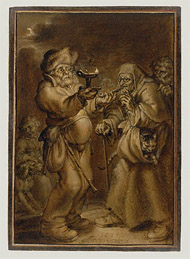
For centuries artists have displayed their technical virtuosity by composing scenes in which light penetrates darkness. Nocturnal light—whether its source is divine, artificial, or natural—has held many symbolic associations beyond its functional role. |
|||||||||||||
|
|||||||||||||
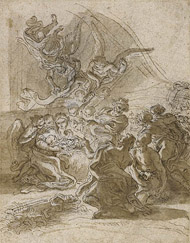
Divine Light In the Judeo-Christian tradition, light is a visible sign of the divine. The Gospels refer to God as "the Light of Men," and Christ refers to himself as "the Light of the World." When artists depicted the presence of God, they often relied on the contrast between darkness and divine light to heighten drama, elicit strong emotional responses from the viewer, and to symbolize the power of faith. |
|||||||||||||
|
|||||||||||||
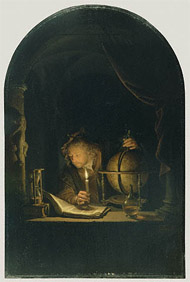
Candlelight In the 1600s candlelit night scenes became popular. Artists used candlelight to create the illusion of spatial recession through contrasts of light and dark. They also experimented with techniques to suggest the flickering of flame and depict textures in naturalistic detail. Candles also held symbolic meaning as emblems of vanity and faith. |
|||||||||||||
|
|||||||||||||
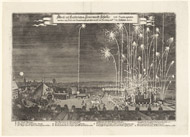
Firelight Fire, traditionally associated with divine punishment and wrath, often appears in images of hell and the damned. Depictions of burning cities became popular in the 1500s, likely as visual commentaries on contemporary political, religious, and social conflicts. Displays of fireworks, on the other hand, often celebrated major political events. Thus, engravings depicting fireworks not only commemorated historical events, but also perpetuated the memory of ephemeral spectacles. |
|||||||||||||
|
|||||||||||||
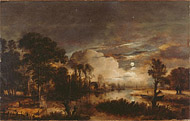
Moonlight While 17th-century Dutch and Flemish painters excelled at representing sunlit landscapes, they also developed the nocturnal landscape in which beams of silvery moonlight shimmer across clouds, rivers, and trees. In depicting moonlit scenes, artists explored the landscape's potential for drama and mystery through vivid contrasts of light and dark. |
|||||||||||||
|
|||||||||||||